Salmon is one of the delicious fish you can cook very easily and quickly at home, using any method, whether you want to use an oven, air fryer, grill, or stovetop. A lot of people end up cooking it dry, and sometimes it’s overcooked, little do they know that there is a trick that we are gonna discuss in this article.
Salmon is loaded with protein and heart-healthy omega-3 fats, and it cooks up very quickly. Fortunately, preparing salmon doesn’t need to be complicated. You can have flaky salmon in less than 30 minutes if you know the right cooking times, temperatures, and methods.
In this guide, you will learn exactly how to cook salmon using different methods. These simple tips that we are going to provide here in this article will help you cook salmon perfectly every time.
Best Ways to Cook Salmon
One of the best things about salmon is how versatile it is. You can bake it in the oven for an easy hands-off dinner, cook it in the air fryer for crispy edges, sear it in a skillet for rich flavor, or grill it for a smoky finish. Each method gives salmon a slightly different texture and taste, so the best option really depends on your preference and the equipment you have at home.
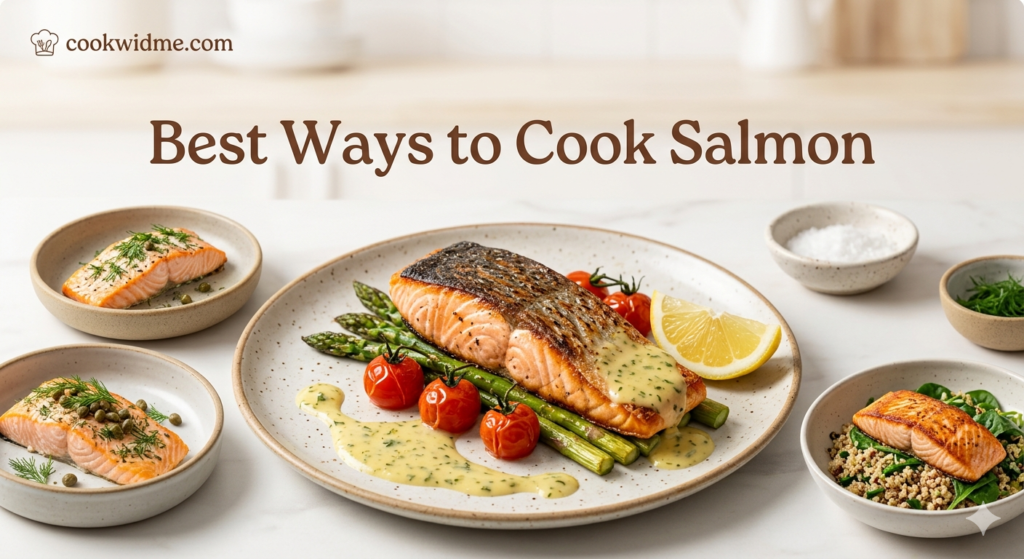
Here are the most popular ways to cook salmon:
How to Cook Salmon in the Oven
Baking salmon in the oven is one of the easiest and most reliable cooking methods, especially for beginners. It cooks evenly, requires very little effort, and helps keep the salmon tender and juicy. If you’re wondering how to cook salmon in the oven without drying it out, the key is using the right temperature and cooking time.
Start by preheating your oven to 400°F (200°C). Pat the salmon dry with paper towels, then place it on a lined baking tray or in a baking dish. Brush the fillets lightly with olive oil or melted butter and season with salt, pepper, garlic, lemon juice, or your favorite herbs.
Bake the salmon uncovered for about 12 to 15 minutes, depending on the thickness of the fillet. Thicker cuts may need a few extra minutes. The salmon is done when it flakes easily with a fork and reaches an internal temperature of 145°F.
If you want extra moisture, you can wrap the salmon in foil before baking. This method works especially well for larger fillets and helps lock in flavor while cooking.
Related: Easy 10-Minute Breakfast Recipe
How to Cook Salmon in Air Fryer
Air fryers are perfect for cooking salmon quickly while creating a slightly crispy exterior. This method is ideal for busy weeknights because it takes less than 10 minutes to cook.
To cook salmon in the air fryer, preheat the air fryer to 400°F. Lightly coat the salmon with oil and season it as desired. Place the fillets skin-side down in the basket, leaving space between each piece for proper airflow.
Cook the salmon for about 7 to 10 minutes at 400°F. Smaller fillets cook faster, while thicker cuts may need an extra minute or two. The outside should look lightly crisp while the inside stays moist and flaky.
One of the biggest advantages of air fryer salmon is how little cleanup is required compared to traditional cooking methods.
How to Cook Salmon on the Stove
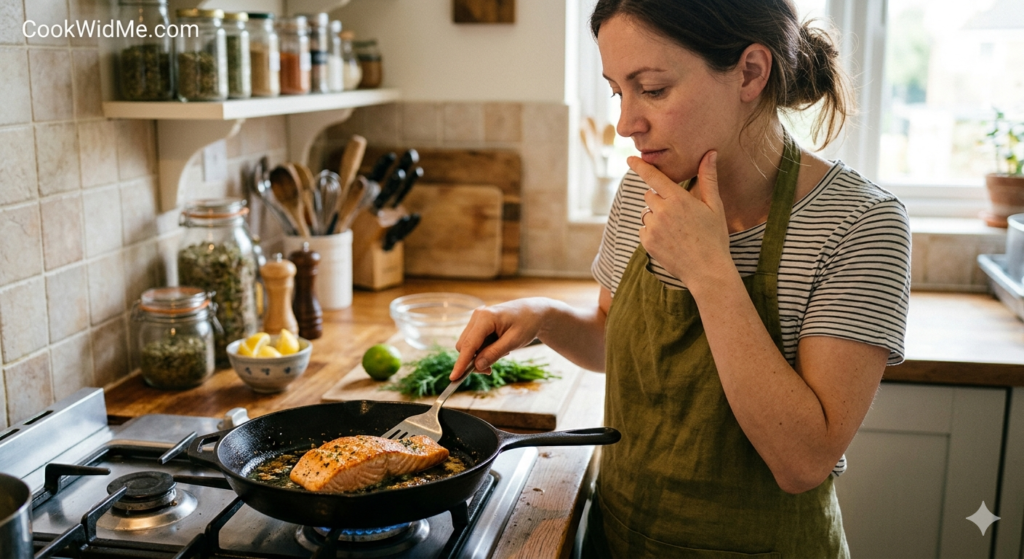
Cooking salmon on the stove gives you excellent control over texture and flavor. It’s also one of the best ways to get crispy salmon skin.
Heat a skillet over medium heat and add a small amount of oil. Once the pan is hot, place the salmon skin-side down and press gently for a few seconds to keep the skin flat against the pan.
Cook the salmon for about 4 to 5 minutes on the skin side until crispy. Flip carefully and cook the other side for another 2 to 4 minutes depending on thickness.
A skillet method works especially well for skin-on salmon fillets because the direct heat creates a golden crust while keeping the inside tender and juicy.
How to Cook Salmon on the Grill
Grilled salmon has a smoky flavor that works perfectly during summer cookouts or outdoor meals. The trick is preventing the fish from sticking to the grill grates.
Start by preheating the grill to medium-high heat and lightly oiling the grates. Brush the salmon with oil and season it before placing it skin-side down on the grill.
Cook for about 4 to 5 minutes per side depending on thickness. If you’re worried about sticking, you can also grill the salmon on foil or a cedar plank for easier handling.
Grilled salmon pairs well with lemon, garlic butter, fresh herbs, and simple vegetable side dishes.
How to Cook Frozen Salmon
If you forgot to thaw your salmon, don’t worry — you can still cook it directly from frozen. Frozen salmon works especially well in the oven and air fryer.
To cook frozen salmon in the oven, bake it at 400°F for about 20 to 25 minutes. Start by cooking it covered for the first half of the time to help it thaw gently, then uncover it so the outside can finish cooking properly.
You may notice extra moisture released while cooking frozen fish, which is completely normal. Simply drain excess liquid if needed before adding additional seasoning.
Cooking frozen salmon is convenient and still produces tender, flavorful results when done correctly.
How Long to Cook Salmon
Cooking time is one of the most important parts of making perfect salmon. Even a few extra minutes can turn soft, flaky fish into something dry and tough. The exact time depends on the cooking method, temperature, and thickness of the salmon fillet.
Here’s a quick guide for common cooking methods:
| Cooking Method | Temperature | Cooking Time |
|---|---|---|
| Oven | 400°F | 12–15 minutes |
| Air Fryer | 400°F | 7–10 minutes |
| Grill | Medium-High Heat | 8–10 minutes |
| Skillet/Stove | Medium Heat | 4–5 minutes per side |
How to Tell When Salmon Is Done
Perfectly cooked salmon should be moist, flaky, and slightly translucent in the center. One of the easiest ways to check is by gently pressing the fish with a fork. If the layers begin to separate easily, the salmon is ready.
The color also changes during cooking. Raw salmon looks deep and shiny, while cooked salmon becomes lighter and opaque throughout most of the fillet.
For the most accurate results, use a food thermometer. Salmon is considered fully cooked when the internal temperature reaches 145°F. However, some people prefer removing it slightly earlier for a softer texture since the fish continues cooking after resting.
Avoid waiting until the salmon looks completely dry or starts breaking apart on its own, as that usually means it has been overcooked.
Related: LPG vs Electric vs Hydrogen
Conclusion:
Learning how to cook salmon is much easier once you understand the basics of cooking time, temperature, and preparation. Whether you bake it in the oven, cook it in the air fryer, sear it in a skillet, or grill it outdoors, salmon can turn into a quick and flavorful meal with very little effort.
The most important thing is to avoid overcooking the fish. Keeping an eye on the texture and internal temperature helps you get tender, flaky salmon every time. You can also experiment with different seasonings, marinades, and side dishes to create meals that fit your taste.
Now that you know how to cook salmon using several easy methods, you can confidently prepare fresh or frozen salmon at home whenever you want a healthy and delicious dinner.
Read more blogs on cook with me