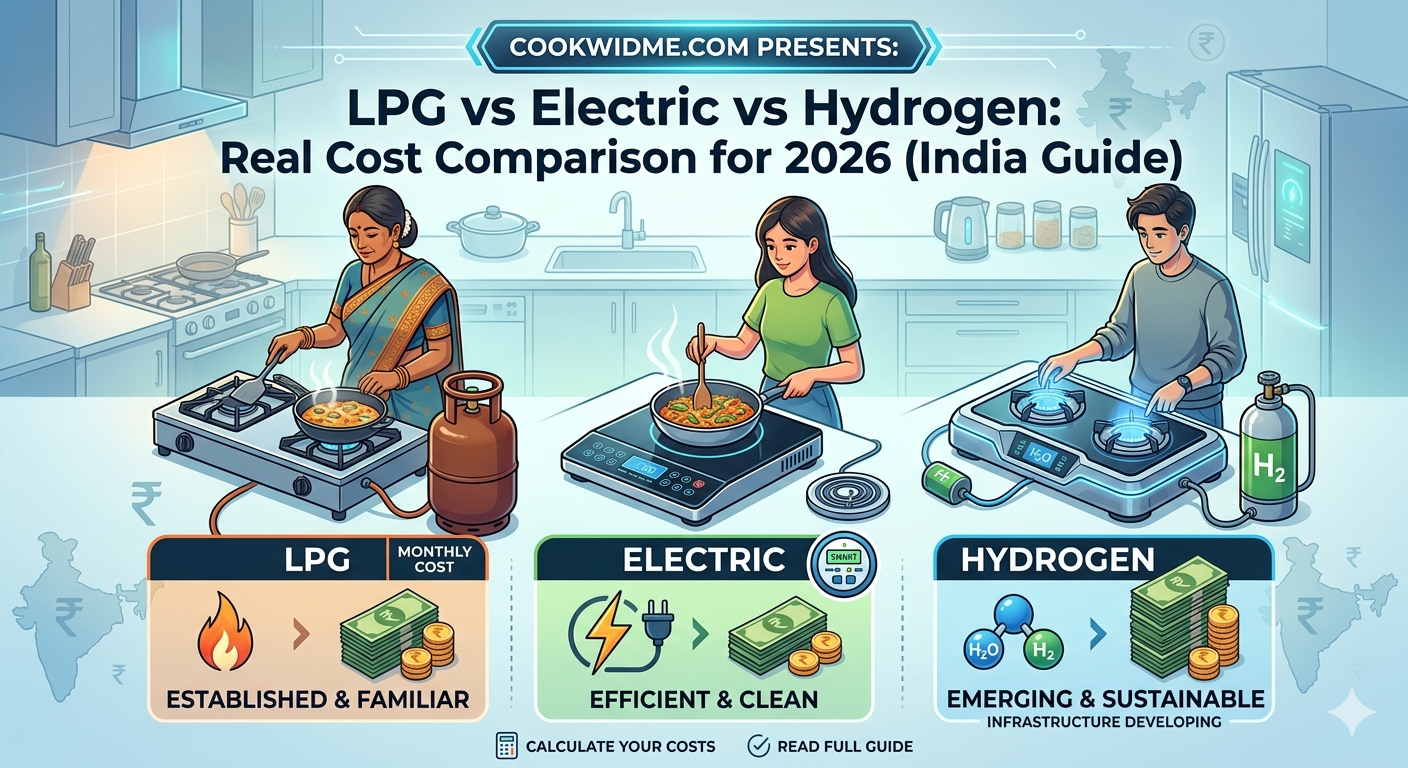
People here in India don’t just choose energy sources based on how easy they are to use anymore; they also think about how much they cost, how well they work, and how long they will last this is where the comparison between LPG vs Electric vs Hydrogen comes to light. As the prices of LPG cylinders change, electricity becomes easier to get, and hydrogen comes up as a possible future fuel, a lot of homes and businesses are asking the same question: which option will be the cheapest in 2026?
The answer might seem clear at first. LPG has been the most popular fuel for a long time. Induction cooking and electric vehicles (EVs) are making electricity more popular, and hydrogen is often talked about as the fuel of the future. But if you look more closely, the real cost isn’t just the price you pay up front; it’s also how much you spend over time based on how often you use it, how well it works, and how easy it is to find.
We will look at the costs of LPG, electric, and hydrogen in real-life situations like cooking and getting around so that you can clearly see which option will save you the most money in 2026. You may also check out our article on Best mixer grinder for Indian cooking.
Cost Comparison in 2026
To find out which energy source is really cheaper, you have to look at the cost per use, not just the headline prices. In 2026, LPG, electricity, and hydrogen are all at very different points in terms of price and availability in India.
LPG Cost in 2026
Prices for LPG keep going up and down, but in most Indian cities, a domestic cylinder usually costs between ₹900 and ₹1100. One cylinder lasts about a month for an average household, which makes it a reliable option, but not always the cheapest.
When you look at it more closely, LPG has a moderate efficiency, which means that some energy is lost while cooking. So the upfront cost seems reasonable, but the cost per useful energy is a little higher than it seems.
Electricity Cost in 2026
Prices for electricity vary from state to state, but in India, the average price is between ₹6 and ₹10 per kWh. Electricity turns a higher percentage of energy into actual use when appliances like induction cooktops and electric cars are used.
Induction cooking, for instance, uses very little energy compared to gas. This means that electricity is often cheaper in the long run, even if the per-unit rate seems the same.
Hydrogen Cost in 2026
People are still just starting to use hydrogen. In India, green hydrogen costs about ₹300–₹500 per kg in 2026. This is a lot more than LPG or electricity.
Hydrogen is very clean and efficient, but it isn’t a good low-cost option right now because there isn’t enough infrastructure and the costs of making it are too high. It’s more of an investment for the future than a good deal right now.
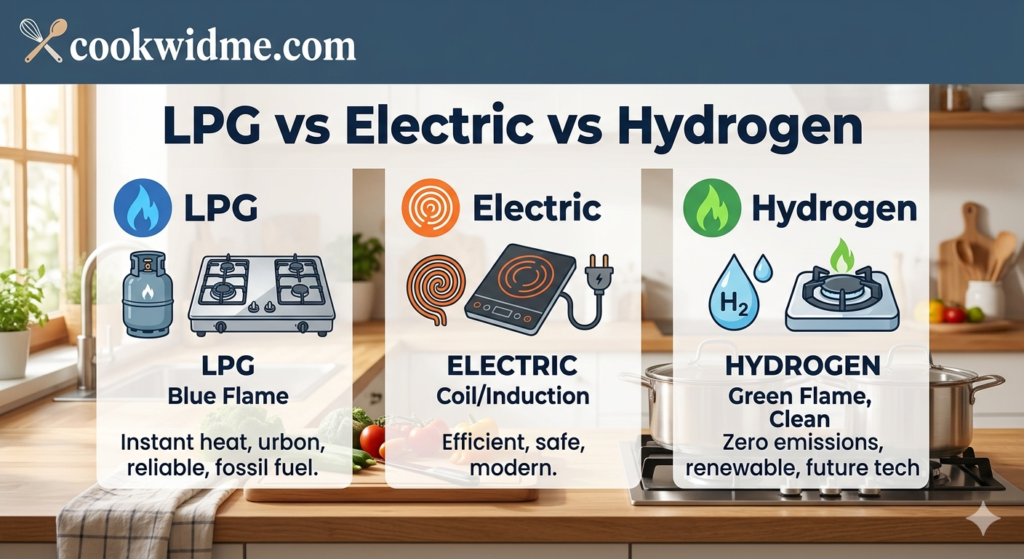
Comparison Table
| Energy Source | Typical Cost (2026) | Efficiency | Overall Affordability |
|---|---|---|---|
| LPG | ₹900–₹1100/cylinder | Medium | Moderate |
| Electricity | ₹6–₹10 per kWh | High | Low–Moderate (best value) |
| Hydrogen | ₹300–₹500 per kg | Very High | Expensive |
Read more: How to Cook Pasta Perfectly
Real-Life Cost Comparison
Looking at raw prices is helpful, but what really matters is monthly spending in everyday situations. Here’s how LPG, electricity, and hydrogen compare when you put them into real use.
Cooking Cost (Household Use)
For a typical Indian household:
LPG:
One cylinder (~₹900–₹1100) usually lasts about a month.
Monthly cost: ~₹1000
Electric (Induction Stove):
Induction cooking for a family typically uses around 120–150 kWh/month.
At ₹7/unit average:
Monthly cost: ~₹800–₹1050
Hydrogen:
Not practically available for home cooking yet. Even if it were:
Estimated cost: Very high (not viable for households)
Conclusion (Cooking):
Electricity is often slightly cheaper or equal to LPG, but more efficient. Hydrogen isn’t a realistic option yet.
Transportation Cost (Monthly Use)
Let’s compare a typical monthly travel scenario (~800–1000 km):
LPG/CNG Vehicle:
Monthly fuel cost: ~₹2500–₹4000
Electric Vehicle (EV):
Charging cost depends on usage, but generally:
Monthly cost: ~₹800–₹1500
Hydrogen Vehicle:
With current hydrogen prices:
Monthly cost: ~₹4000–₹7000+
Conclusion (Transport):
Electric vehicles are clearly the cheapest to run, while hydrogen remains the most expensive.
Hidden Costs & Efficiency
When comparing LPG, electricity, and hydrogen, the real differences often come from things that people don’t think about right away. LPG may seem simple, but it requires regular cylinder refills and loses some energy while in use, which adds up over time.
Electricity, on the other hand, usually costs more up front, like when you buy an induction cooktop or an electric car. However, it is much more efficient, which means that you actually use more of the energy you pay for.
Hydrogen has the most potential for efficiency, but in 2026, storage systems, specialized equipment, and almost non-existent infrastructure make it impractical for most people to use.
In simple terms, while LPG looks convenient and electricity looks slightly technical at first, electricity often turns out to be more cost-effective over time, whereas hydrogen remains expensive due to setup and accessibility challenges.
Read more: How to Cook Rice Perfectly
Future Outlook (2026–2030)
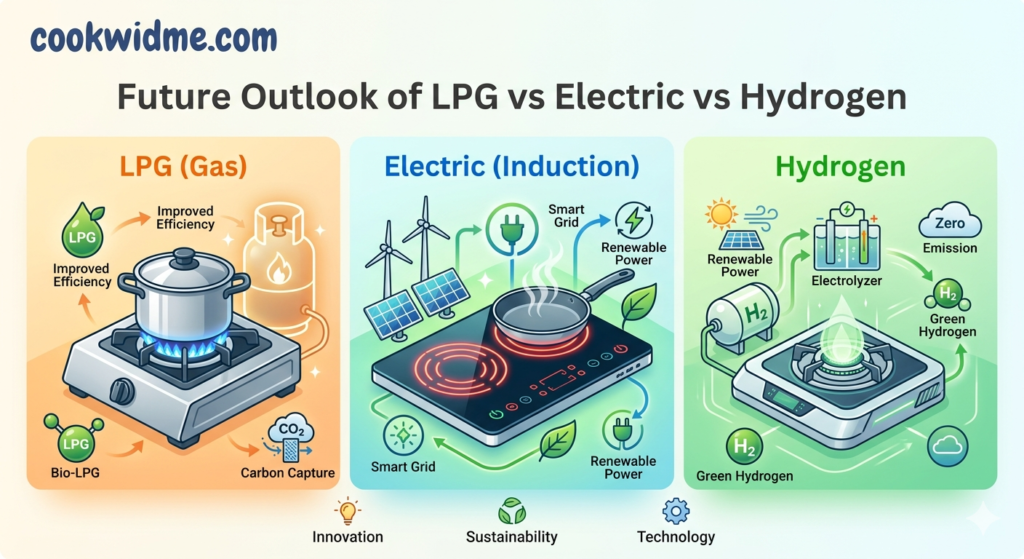
Over the next few years, electricity is likely to become even cheaper. This is mostly because India is quickly adding more renewable energy sources like solar and wind. Adding more clean energy to the grid is likely to lower the cost of making electricity, which is good for consumers. This trend makes electricity even more likely to be the cheapest option for homes and transportation in the near future.
On the other hand, the price of LPG is likely to stay unpredictable. Because it is so closely linked to the global crude oil markets, any changes in prices around the world can have a direct effect on the cost of LPG in the US. It will still be widely used because it is easy to use and there is already infrastructure in place, but it may not be as affordable in the long term as electricity.
Hydrogen holds strong future potential, especially as a clean energy source, but it is still in the early stages of adoption. Government initiatives and increased investment could gradually reduce production costs, particularly for green hydrogen. However, due to high setup costs and limited infrastructure, hydrogen is unlikely to become a cheaper everyday option before 2030, making it more of a long-term solution rather than an immediate one.
Read more: Easy 10-Minute Breakfast Recipes
Conclusion: Which Is Cheapest in 2026?
When you look at how much it costs to use and how much it will cost in the long run, electricity is clearly the best choice in 2026. Electricity is the best value for most city homes because it costs less to run and works better for things like cooking on an induction stove or driving an electric car. Even though the initial cost is a little higher, the savings over time make a big difference.
LPG is still a reliable and widely available choice, especially in places where the power supply can be unreliable. But in many cases, it’s no longer the cheapest option. Its prices are still reasonable but hard to predict, which makes it less appealing to people who want to cut costs in the long run.
Hydrogen is the cleanest and most advanced option, but it isn’t practical yet because of the cost. In 2026, it will be the most expensive option because fuel prices are high and there isn’t much infrastructure. For now, it’s still a promising technology for the future, not a good way to save money every day.
Read more blogs on cookwidme